


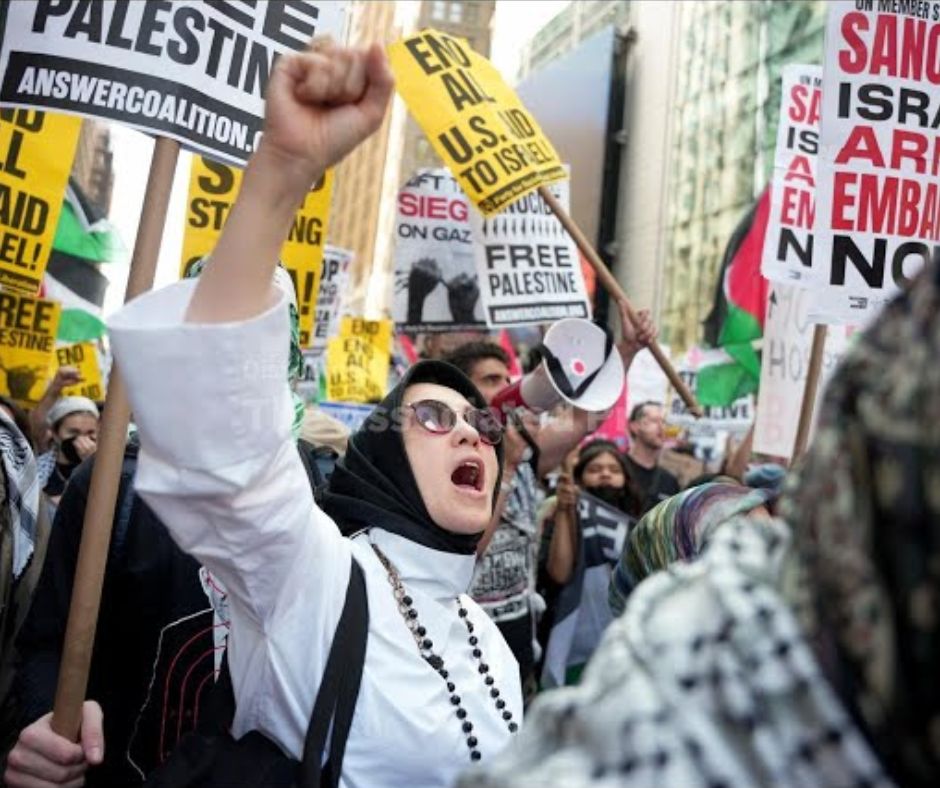

NEW YORK — A growing body of research and independent reporting finds that China-linked networks helped fund and amplify several anti-Israel demonstrations in the United States, according to a July 2025 report by the George Washington University Program on Extremism and subsequent media investigations.
The GWU report centers on a network tied to Neville Roy Singham, an American businessman now based in Shanghai, and documents financial pathways and media operations that supported far-left groups active in post-October 2023 anti-Israel activism, the university said.
Researchers say the network used nonprofits, alternative media outlets, and social platforms to amplify protests and narratives critical of the United States and Israel. Those narratives often framed the Israel-Palestine conflict as part of a broader struggle against U.S. policy and influence, a theme that dovetails with messaging promoted by Chinese state actors seeking to undercut Western unity, the report said.
The GWU study found links between Singham’s funding and a cluster of organizations, including the People’s Forum and other groups that helped organize large campus and street protests. The report concluded that while individual demonstrators may have genuine grievances, the surrounding infrastructure reveals deeper strategic intent tied to geopolitical influence. “At its core, Beijing’s involvement is about power and positioning: using domestic dissent in the U.S. to project weakness abroad, while casting China as a principled champion of peace and justice,” the report said.
Tech and social media played a central role. Investigations by media outlets and researchers point to digital media outlets that received funding from the network and then pivoted to cover the Israel-Palestine conflict intensively, gaining large online audiences. Independent platform enforcement actions have previously removed coordinated influence campaigns tied to Chinese actors, underscoring the capability and reach of such operations.
The revelations prompted scrutiny in Washington. The U.S. House Committee on Oversight and Government Reform sent a June 2025 letter seeking documents from Singham as part of an inquiry into reported funding of activist groups and potential violations of domestic disclosure laws. Lawmakers have raised concerns that covert funding and coordinated media messaging can magnify social divisions and hinder democratic debate.
Analysts and policy centers see a strategic logic. Experts at think tanks, including the Wilson Center, have argued that Beijing has incentives to exploit polarizing issues, such as the Israel-Palestine conflict, to weaken Western cohesion and advance its own geopolitical goals. By amplifying grievances and stoking distrust in democratic institutions, a foreign actor can gain regional influence and present itself as a counterweight to Western power.
The reporting does not argue that all anti-Israel protest activity is orchestrated. Investigators and journalists emphasize that many participants are motivated by genuine grievance and solidarity with Palestinians. The GWU report and follow-up coverage stress a distinction between grassroots protestors and the infrastructure that funnels resources, messaging, and distribution capacity to certain groups.
Skeptics and defenders of the groups named in the research caution against overreach. Some critics say that congressional inquiries and media reports risk painting mainstream activism with an unduly broad brush. Organizations in the network have pushed back, and some outlets noted denials or lack of response from named actors when asked about state direction or direct government control. CodePink, for example, has denied receiving funding from the Chinese government.
For Jewish and pro-Israel communities, the findings add urgency to long-standing calls for vigilance. Community leaders say foreign exploitation of protest movements can intensify antisemitic incidents, obscure the real sources of violence, and complicate efforts to hold extremist actors accountable. Advocates argue that transparency about funding, rapid removal of hate speech online, and coordinated law enforcement and community security responses are essential to protect vulnerable communities.
U.S. and allied officials will likely continue probing the financial flows and media links that enabled parts of the protest movement to scale rapidly. The broader debate raises complex questions about foreign influence, freedom of assembly, the role of private philanthropy in politics, and how democratic societies should respond when external actors seek to exploit domestic fault lines.
Thank you for reading. If you value independent Jewish journalism, help keep our reporting free and reliable, share this article, subscribe for regular coverage, or donate $10, $25, or $50 today.
Every gift powers timely, trusted reporting and amplifies pro-Israel voices defending Jewish rights worldwide. Donate now.
This article is based on verified information from the George Washington University Program on Extremism, The Times of Israel, The Jerusalem Post, the Wilson Center, and reporting on platform enforcement actions by Meta and other outlets.