
PETAH TIKVA, ISRAEL | A multidisciplinary Israeli surgical team has successfully replaced half of a 15-year-old cancer patient’s pelvis with a custom-designed 3D-printed titanium and advanced polymer implant in what the hospitals described as a landmark procedure.
The operation was performed by specialists from Clalit-Schneider Children’s Medical Center and Clalit-Beilinson Hospital, both part of Clalit, Israel’s largest healthcare organization.
The patient, Mark, traveled to Israel from Russia in search of advanced treatment after top specialists elsewhere had classified his pelvic tumor as inoperable.
Mark had first been diagnosed with rhabdomyosarcoma at age two and had previously overcome the disease. At age 14, however, he developed osteosarcoma, a rare and aggressive bone cancer, in the pelvic region. The cancer was accompanied by metastases in his lungs.
Because the tumor had spread across multiple pelvic bones, complete surgical removal posed an exceptional challenge.
For osteosarcoma patients, complete resection of the tumor is often critical to long-term survival.
Chemotherapy Cleared Lung Metastases
Mark’s treatment at Clalit-Schneider began with targeted chemotherapy led by Dr. Orli Michaeli, a pediatric hematology-oncology specialist.
According to the medical team, the treatment successfully cleared the lung metastases and reduced the size of the primary tumor.
The structural problem in the pelvis, however, remained.
Rather than accept the earlier conclusion that the tumor could not be removed, surgeons from Schneider and Beilinson began planning a reconstructive procedure tailored to Mark’s anatomy.
The planning process took hundreds of hours and involved detailed digital modeling.
The eventual operation lasted 19 hours.
Surgeons removed half of Mark’s pelvis and replaced the missing structure with a custom implant created specifically for him.
“One of the Most Complex and Challenging Cases”
Dr. Israel Weiss, head of the Orthopedic Oncology Unit at Clalit-Schneider and Clalit-Beilinson hospitals, described the case as among the most difficult the team had faced.
“This was one of the most complex and challenging cases we have ever encountered,” Weiss said.
“Instead of accepting that the tumor was inoperable, our cross-institutional teams combined custom 3D design and advanced printing technology to open a new horizon of possibilities.”
Weiss said the case demonstrated the value of combining expertise from multiple disciplines and hospitals within the Clalit network.
“This breakthrough showcases the power of integrated expertise across our network,” he said.
Key members of the surgical team included Dr. Eviatar Nesher, head of the Transplantation Department at Clalit-Beilinson, and Prof. Yona Kosashvili, head of the Orthopedic Department at Clalit-Beilinson.
Implant Designed to Restore Function
The procedure was not limited to removing the cancer.
The surgical team also sought to preserve Mark’s ability to walk and regain mobility.
Dr. Arie Greenberg, a specialist in joint replacement and orthopedic oncology at Clalit-Beilinson Hospital, said the custom implant was designed to match Mark’s exact anatomy.
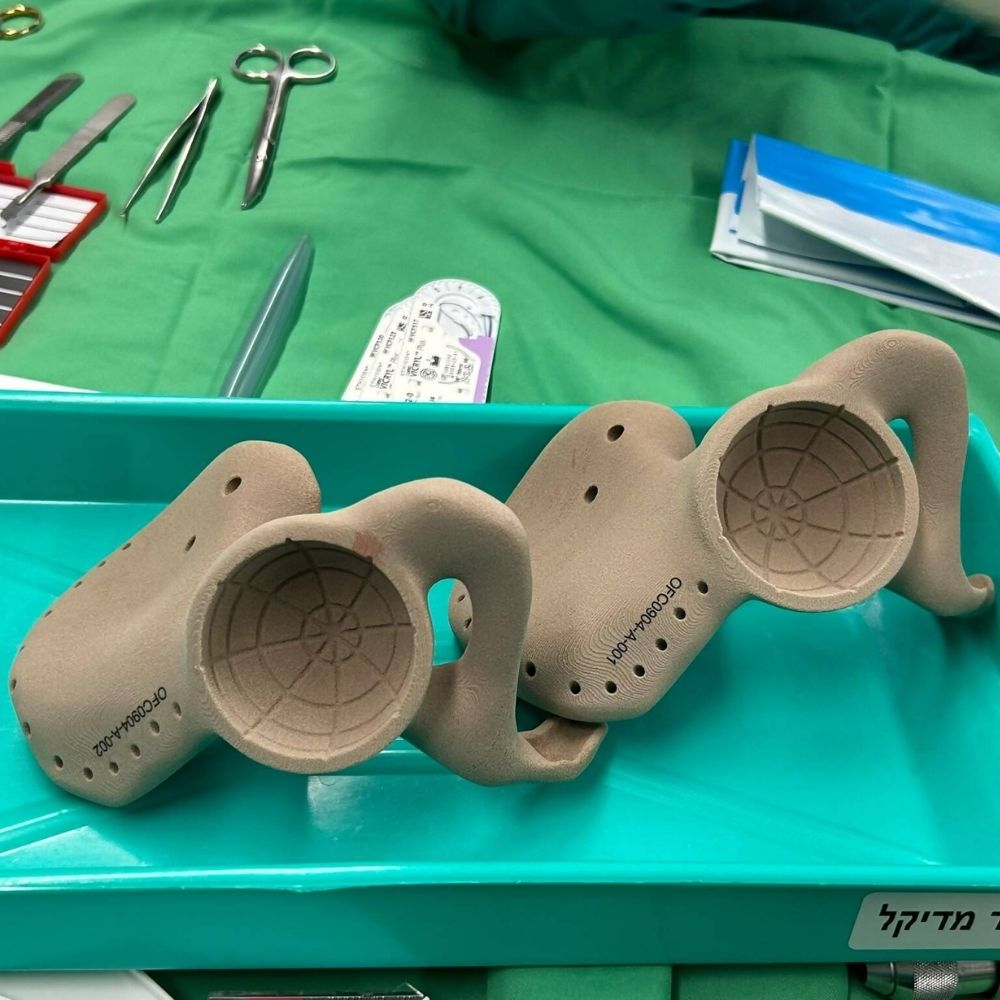
“The goal was not just to remove the tumor, but to restore mobility,” Greenberg said.
“We designed a custom implant using an advanced polymer that allows bone growth into the structure, matching his exact anatomy.”
He described the approach as “a quantum leap in surgical oncology.”
The combination of 3D modeling, custom manufacturing and advanced implant materials allowed the team to reconstruct a large portion of the pelvis after the tumor was removed.
3D Printing Expands Surgical Options
Custom 3D-printed implants are increasingly used in highly complex orthopedic and oncological surgery because they can be designed around an individual patient’s anatomy.
Traditional implants are manufactured in standard sizes and shapes.
By contrast, 3D printing allows surgeons and engineers to create structures that replicate missing bone and accommodate the specific geometry of a patient’s body.
That can be particularly important in pelvic surgery, where major blood vessels, nerves, muscles and internal organs are concentrated within a relatively small anatomical space.
Large pelvic tumors can therefore be especially difficult to remove while preserving function.
In Mark’s case, the implant had to replace a substantial portion of the pelvis while maintaining structural stability and allowing biological integration with the remaining bone.
From “Inoperable” to Rehabilitation
The case also highlights the role of multidisciplinary cancer treatment.
Chemotherapy first reduced the disease burden.
Orthopedic oncology specialists then planned the resection.
Surgeons from multiple disciplines worked together during the operation.
Reconstructive technology was then used to replace what had been removed.
The hospitals said the collaboration made an operation previously considered technically impossible achievable.
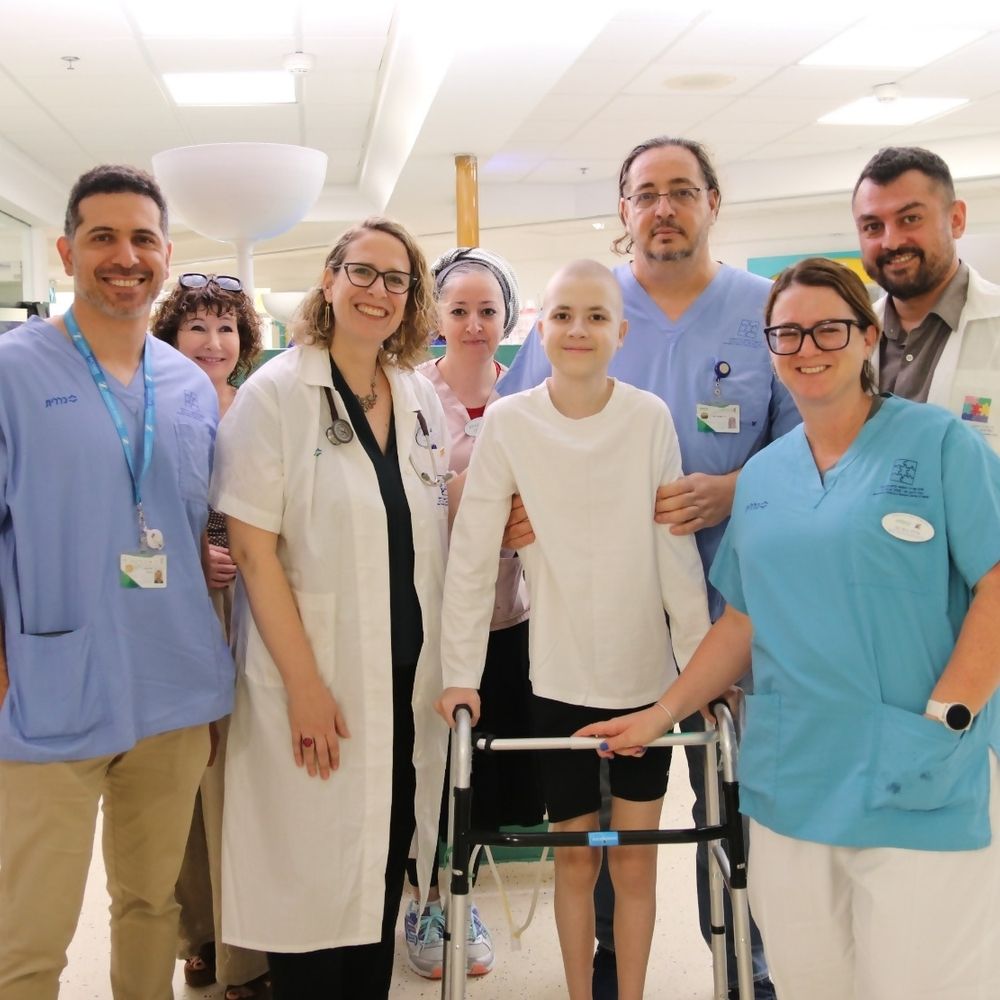
Mark is now recovering at Clalit-Schneider Children’s Medical Center.
He has begun rehabilitation and is being closely monitored by his medical team.
The immediate goals include healing, maintaining structural stability and gradually restoring movement.
His long-term recovery will also depend on continued cancer surveillance.
A Broader Israeli Medical Capability
The procedure reflects Israel’s growing use of individualized medical technology in complex surgery.
Israeli hospitals have increasingly incorporated advanced imaging, digital surgical planning, additive manufacturing and personalized implants into cases where conventional surgical methods may offer limited options.
In orthopedic oncology, those tools can allow surgeons to remove aggressive tumors while preserving limbs or major skeletal structures.
The Schneider-Beilinson procedure is particularly significant because of the scale of the reconstruction.
Replacing half of the pelvis in a 15-year-old patient requires not only tumor removal but also long-term consideration of growth, mobility and quality of life.
The hospitals said the case illustrates how coordinated expertise across pediatric oncology, orthopedic oncology, transplant surgery, reconstruction and rehabilitation can expand treatment options for patients previously considered beyond surgery.
For Mark and his family, the outcome has already changed the trajectory of a case once defined by the word “inoperable.”
He is now in rehabilitation, recovering from a 19-hour operation that replaced half of his pelvis and gave his medical team a new path forward.
TheJ.ca receives no government money. Independent journalism depends on readers who believe these stories must be told. Consider supporting our efforts.
Stand Proud. Stand Strong. Stand Zionist.